“Midlife crisis” has a negative connotation and some pretty lousy associations, so perhaps it is time that I stop using the term to describe the events that, around midlife, pushed me in a new direction. Let’s call it a “light bulb moment” because the pun is irresistible and, well, it describes the situation. A switch was flipped.
A light bulb moment is, by definition, a moment and not a lifetime. On the backside of my realization that light is a universal gift that can help us live better lives, I had a decision to make. How would I use this gift? How could I share it? And, perhaps most urgently, would it pay the bills?
I have a tendency towards diving into the deep end, buoyed by both earned and unearned self-confidence, and supported by my family and friends. This time would be no different, I just needed to decide which river, lake, or ocean was my next dip. Would I focus on commercial lighting design? Theatrical lighting? Landscape? Residential was not on my short list, at least not at first.

These moments are where, in retrospect, I see the hand of God nudging me in a new direction by introducing me, seemingly by chance, to someone or something that presents a new opportunity. In this case, I met a lighting professional by chance (or was it?) who met a custom integrator by chance (or was it?) who then decided to introduce us to each other. The next phase of my life could have turned out very differently if Fred had not introduced me to Jonathan, or if Jonathan had not patiently opened my mind to a new world.
At this point in my life I had never met a Custom Integrator (CI). I did not even know they existed, so the first few years of our relationship were a bit murky…tell me again, what is it that you do?

Custom Integrators are the consummate personal technologists of our day. These are individuals and companies that, quite simply, make things work. The offer an ever-growing array of products and services, united by technology, that make homes and workplaces more functional, beautiful, and even joyful.
While each CI business is unique, you are likely to find audio services, like whole-home audio, hifi stereos, and outdoor audio when you enter a showroom. You may also find televisions (including some of the biggest I have ever seen) and home theaters that easily match or exceed what you experience at the nearest multiplex. Wifi, once a luxury, is now an important utility that allows us to work from home, Zoom from home, stream videos, and play online games at the same time…if we have the right network, and CI businesses can help. Even remote-controlled roller shades, connected kitchen appliances and patio heaters count as technology and can be found in many CI businesses, as can whole-home security and monitoring.
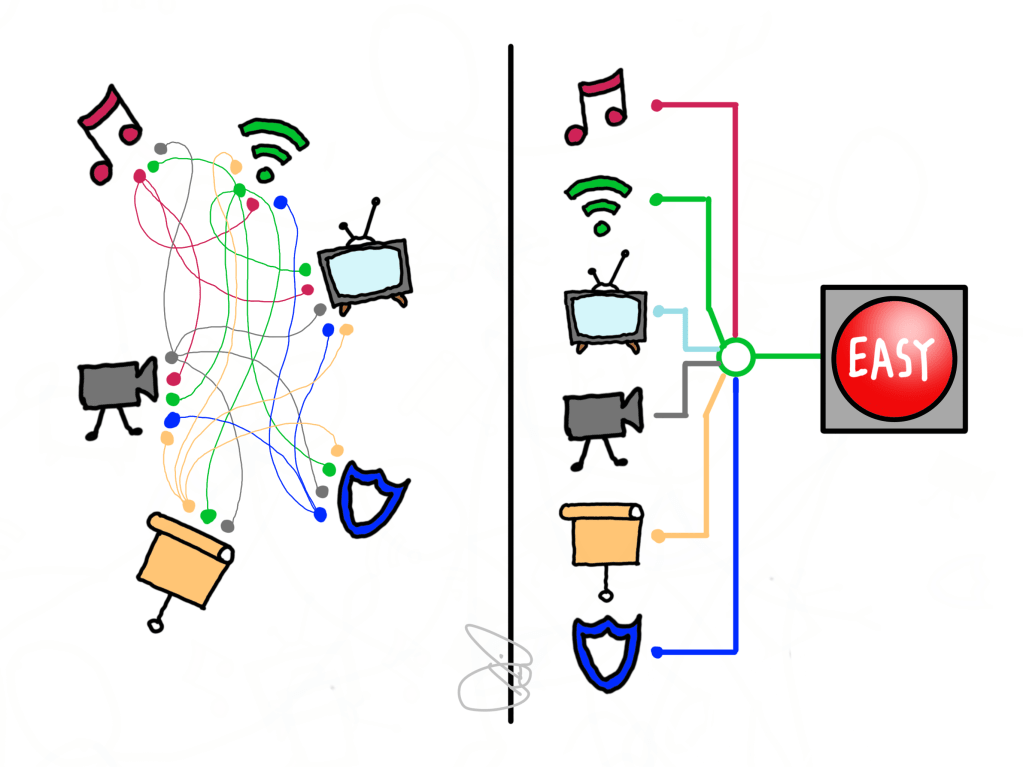
Many of these technologies can be purchased at big box or online retailers, complete with a “easy setup guides” which, sometimes, actually work. So why pay a CI technologist for these items?
Today’s homes and workplaces are more connected than ever. Our televisions are likely getting streaming content over internet, with sound broadcast to separate speakers, also connected to streaming music platforms, all of which may be in rooms with powered roller shades over windows connected to security systems.
It is increasingly hard for us to make all of these items work seamlessly, reliably, and to their full potential. So I have music that sounds okay (not great), a smart tv that is slow as heck to bring up Disney+, and wifi that is strong in parts of the house and weak in others. This is where custom integrators step in to make it all work…and make it all work together. They integrate all the technologies to fit our own personal needs.
And, sometimes, they change your entire career trajectory.

Jonathan and I worked together loosely over a handful of years on a variety of residential projects, and it was Jonathan who pressed me to consider an alternative to traditional lighting design practices. Residential lighting design is typically performed by super-expensive designers, worth every penny but out of reach of most of us. If I could simplify the process, streamline it a bit, Jonathan prompted, then there were thousands and thousands of homeowners currently unserved that might benefit from my help.
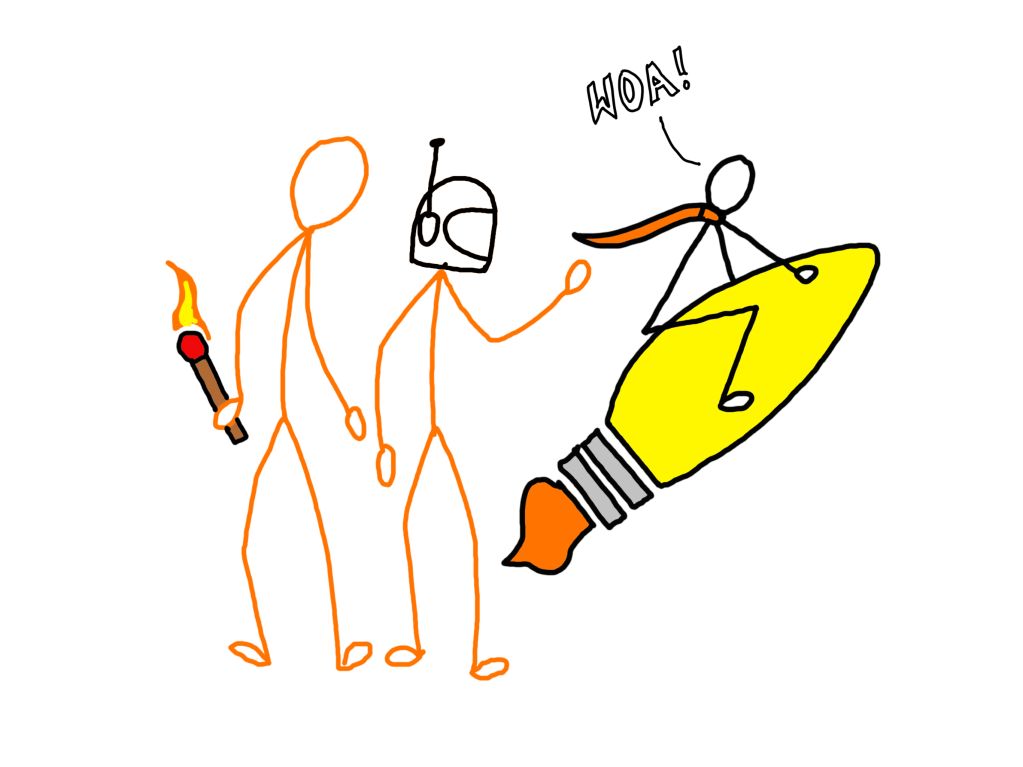
Looking back, I’m not sure either Jonathan or I had an understanding that what he was offering was a rocket ship, but eventually we both saw the opportunity and I dove in headfirst. I renamed the business. I hired a marketing firm. I developed a 3-tier service lineup with options for various price points. I leveraged everything my life and career had given me: the fun of stage lighting, the experience from my architectural lighting background, even my approach to design as a process that I developed as a college teacher.
3…2…1…liftoff!

With the concepts firmly in hand for a new business model, I realized that I could quickly be overwhelmed with work and I made my first hires. Jonathan introduced us to new custom integrators, who in turn introduced us to their clients. Clients recommended us to their friends. Architects saw our unique approach and wanted to try us out. Builders wondered if we could provide lighting design for all of their homes.
And the hiring has not stopped, nor the growth. I have a business partner, Mark, who keeps me sane and brings decades of experience to help guide our rocket. We have studio leaders who manage projects and designers. We have teammates who specialize in CAD, 3D modeling, and every aspect of lighting design from decorative fixtures to commercial spaces.
When I started down this road, I thought that perhaps I could someday lead a company as large as eight people…this was about the size of the biggest lighting firm I had ever known personally. When we pushed past a dozen teammates in just a few years, I had to rethink my reality.

It would be tempting to claim all the credit for the success that our business has achieved over the past few years for myself. I have certainly invested in my work: a lifetime of experiences, the creativity of a designer, the spirit of an entrepreneur, and a good bit of money, too. I have worked hard, almost continuously, since the rocket began to lift off.
But that would be foolish. Space flight takes a lot more than astronauts. There are the engineers that figure out how to make rockets work, the crews that build them, the ground control folks who monitor the flight and communications and make sure all the systems work when they need to. The same is true for us. I am no longer an island, no longer a solo designer. Our team makes possible that which I could never accomplish alone. I am extremely grateful for a business that has created jobs every year, even during the pandemic. And I am extremely grateful for those that share this journey with me as part of our team.
In fact, it is usually best for the business and our customers if I do not do any lighting design at all, because I just slow down the process. So what else can I do with my time that will contribute to the business…and help more people with light?
Read more of my Finding the Gift series HERE.
 the language of light
Leave a comment