The Simple Gift of Light #8
I am looking out my window as I write, and the neighborhood is filled with the sights, sounds, and smells of autumn. It is the time of year when, in Wisconsin where I currently live, we pull out our puffy jackets, fleece zip-ups, stocking caps, and gloves. We light fires inside our homes and outside in our fire pits. We boil water for tea and cocoa and add more candles to the dinner table. We use these items as tools to bring comfort through the cold breezes and shortening days.
Comfort is deeply satisfying, and, in some ways, we spend a large amount of our time, energy, and money chasing it, though each in our own ways. I spend on fleece-lined pants in the winter and comfortable sandals in the summer. I air-condition my house when it gets too hot and heat it when it gets too cold. For the first time in my life, I have heated seats in my car, and I confess I am already in love with the warmth radiating into my body. We just changed our bedsheets to flannel last night; soon it will be cold enough for our down comforter.
We stop at the coffee shop for a warm drink as the temperatures fall or an iced coffee in the summer. We double the padding underneath our carpeting for a soft touch. We buy new shoes that fit just right. We seek out comfortable furniture for our living rooms. We hunt for the perfect pillow for sleeping.
We want to be comfortable, and in a world that can often seem hostile, comfort at home can be a critical element of rest and rejuvenation. Does light play a role? Can you feel more comfortable at home just by changing your lighting?
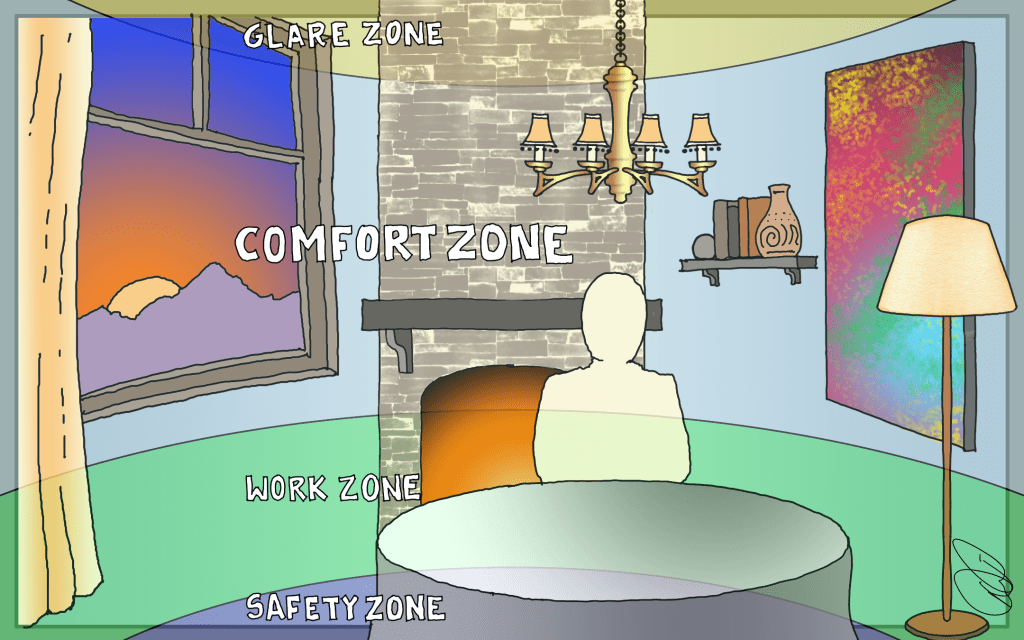
In the previous post I outlined four zones of lighting based on human vision: the Glare, Comfort, Work, and Safety Zones. We live our best lives when our lighting is chosen specifically for each zone, carefully balancing our practical, emotional, and biological needs. I chose to start with the Comfort Zone because this is our “sweet spot” of vision and can similarly be the sweet spot of lighting when done well.
Take a moment to understand your Comfort Zone. Sit (or stand) in a comfortable position, with your body relaxed (but not drooping or asleep). Your head will likely direct your vision straight ahead. What do you see? If you turn your head slightly to your left, without stretching uncomfortably, what do you see? To the right? Our necks are flexible enough to allow us to look in all directions, but our comfort decreases the further we turn from straight on. Looking up at the ceiling will not be comfortable for long. Looking over our shoulder is momentarily at best.
Where we can see with just a little movement of our neck is our sweet spot of vision because that is the area we will see the most, and that same logic leads to the Comfort Zone of lighting.
I mentioned earlier that is a fall day here in Wisconsin. In my sweet spot of vision, I see trees, the houses across the street and next door, art on my walls, and my computer monitor. If I turn around I see the textured wall behind me. When I sit down for dinner I will see the face of my loved one across the table.
Everything in the Comfort Zone inside my house can be illuminated in essentially two ways: one which brings comfort and another that brings discomfort. Knowing the difference is at the root of lighting design.
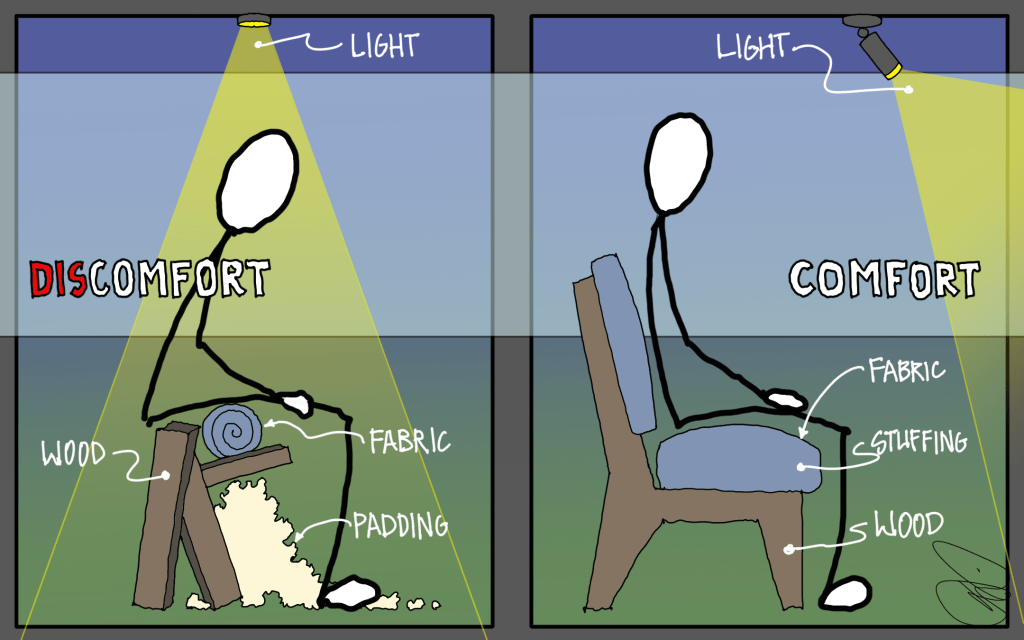
“You need layers of light.” I hear this frequently from trade professionals and that puts the speaker a step ahead of most of the world. Simply possessing layers of light, however, is like having the ingredients for a chocolate cake but not knowing the specifics: what quantities of ingredients are needed, how they should be combined, how long and at what temperature it should be baked, and so on. Yes, you do need layers of light if you want to be comfortable, but you need to follow a recipe. Without a recipe, you might have something vaguely resembling a chocolate cake, but it probably will not taste too great.
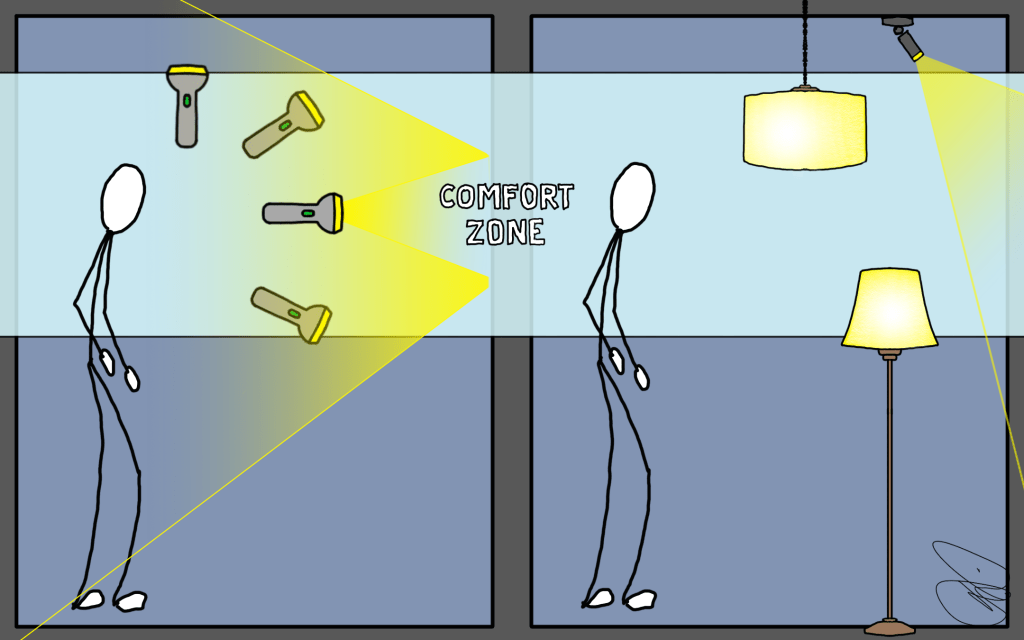
Take a look at the images above. On the left, we have someone seated on the “layers of light” version of a chair. It has all the “layers of comfort” necessary for a good chair: wood, padding, fabric. But when used without a plan, the seating arrangement is ludicrous at best and injurious at worst.
On the right we have the same ingredients, the same materials, the same layers, but the chair is much more comfortable. Light mirrors the seating arrangement in each image: bright, direct downlighting on the left brings discomfort while purposeful, reflected light on the right delivers comfort.
I’ve made the point that you need a recipe for good chocolate cake and a well-constructed chair for comfortable seating. Now let’s build a recipe for a well-constructed lighting solution.
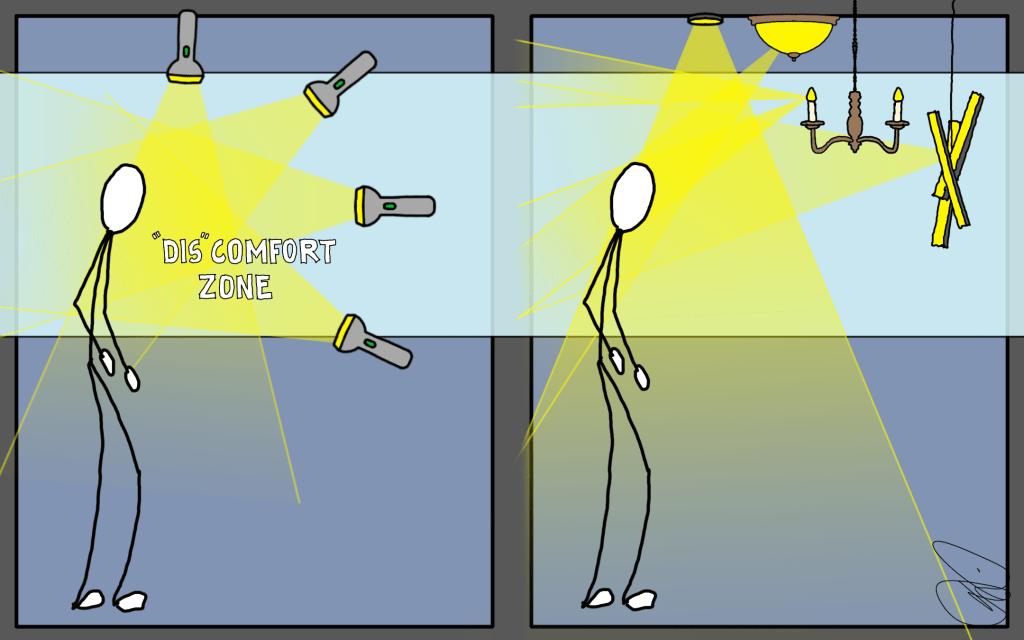
Our Comfort Zone is best when illuminated with comprehensive, adequate, softly reflected light, but this is rarely the case in both new homes and every era of existing houses. If I came over to your house every night, followed you around as you ate dinner, relaxed, and prepared for dinner, and made sure to keep a very bright flashlight pointed at your face, I doubt I would last a single evening before you called the authorities to have me evicted.
Sadly, we’ve been trained to accept almost exactly that: bright overhead lighting directed at our heads instead of soft light reflected in our Comfort Zone. If your home is filled with overhead lights, decorative fixtures with bare bulbs (or bulbs inside clear glass shades), and tiny-but-bright LED fixtures, the chances are high that your Comfort Zone is, well, uncomfortable. An easy way to tell is to hold your hand above your eyes like you would shade them outdoors. If it feels better with your hand above your eyes inside, there is a better way.
If you have a nice bright flashlight, try this out to see the power of reflected light: in a completely dark room, point the flashlight at the wall in front of you. While holding the flashlight steady, look around the room. What can you see? Is there light bouncing gently into the room? Now turn the flashlight off. Are you surprised by how many photos were reflected into the room?
Our Comfort Zone is built for natural light and specifically for the soft, diffuse light that comes from a beautiful blue sky and from sunlight reflected off trees, mountains, and other natural features. Indoors, our eyes are still looking for our horizon and sky to be softly, gently illuminated. Our walls and ceilings, especially what we see in our Comfort Zone, need to reflect light into the space to replace the missing sky and landscape.
Lamps with soft fabric shades and architectural lighting fixtures that bounce light off cabinets, artwork, and walls will re-introduce some of the soft light our bodies crave. We seek comfort in our Comfort Zone, and light can deliver when filtered, diffused, and reflected. Let’s look at some examples from budget-friendly to high-end luxury.
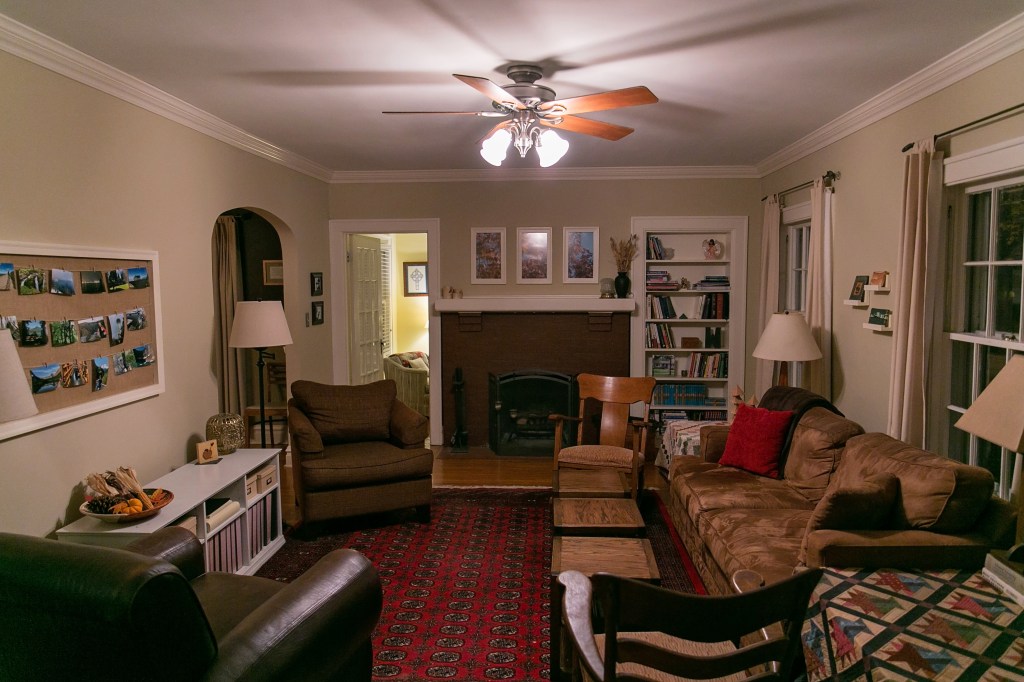
This is a picture from the modest living room of the house we owned awhile back. The Comfort Zone is filled with photographs, a triptych of images above the fireplace and the mantel itself, a bookshelf, curtains, and more. The only existing light in the room came from ceiling fan with classic light kit, essentially four light bulbs pointed right at your face. There is literally no comfortable seat in the room without blinding overhead light that leaves the Comfort Zone dim and stark.
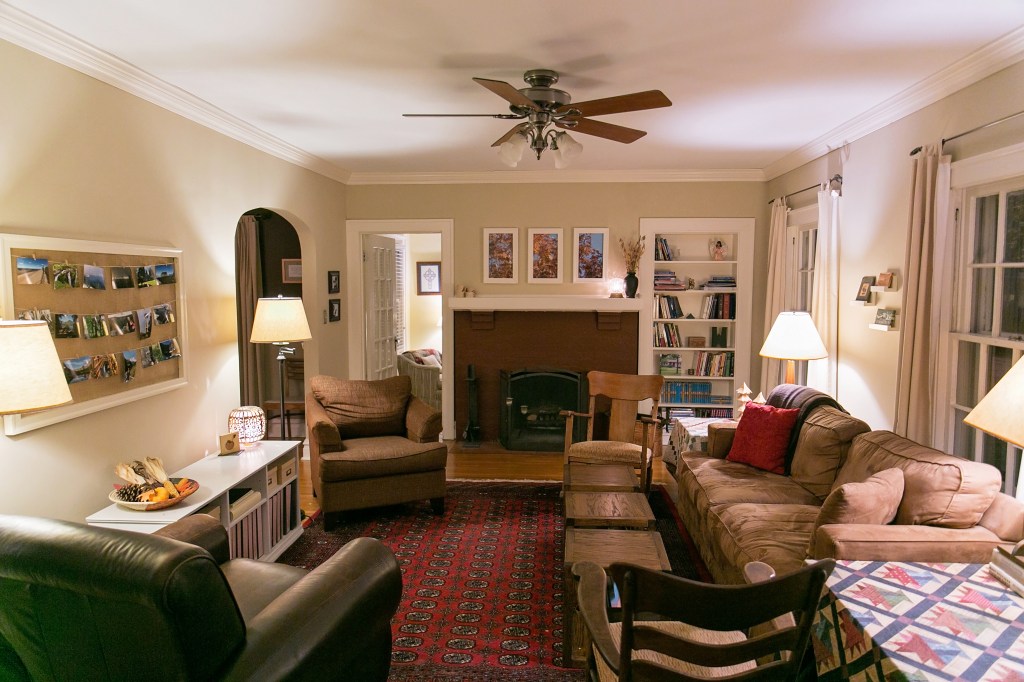
This photograph was taken only a few seconds later and you can see an enormous difference. Even without analyzing the lighting, you probably think this living room is far more comfortable than the first. Why, when the furniture, carpet, and wall hangings are exactly the same?
This image has six lamps, none of which required electrical work or any lighting in the ceiling whatsoever. Four of the lamps feature soft fabric shades that diffuse the light and direct the light downwards and upwards. Notice how we can look directly at each light source without discomfort? Scroll back up to the first photograph. Can you look at the ceiling fan light as comfortably?
The brown chair on the left side, facing us, has a floor lamp to the left. We will talk about the Work Zone more later, but you can instantly see how reading a book in this chair would be supported by the light coming out of the bottom of the shade. Note also how some of the light hits the wall and ceiling, reflecting gently back into the room. The combination of soft light from the shade and light reflected off the wall and ceiling is what makes the Comfort Zone work.
Pick just about any feature of the room – the seating, the carpet, the fireplace, the art – and compare between the two photographs. When we properly illuminate our Comfort Zone with soft light, the rest of the room looks better, too. If we can make such a big difference just by plugging in a few lamps, what could we do with a stunning home and ample budget?
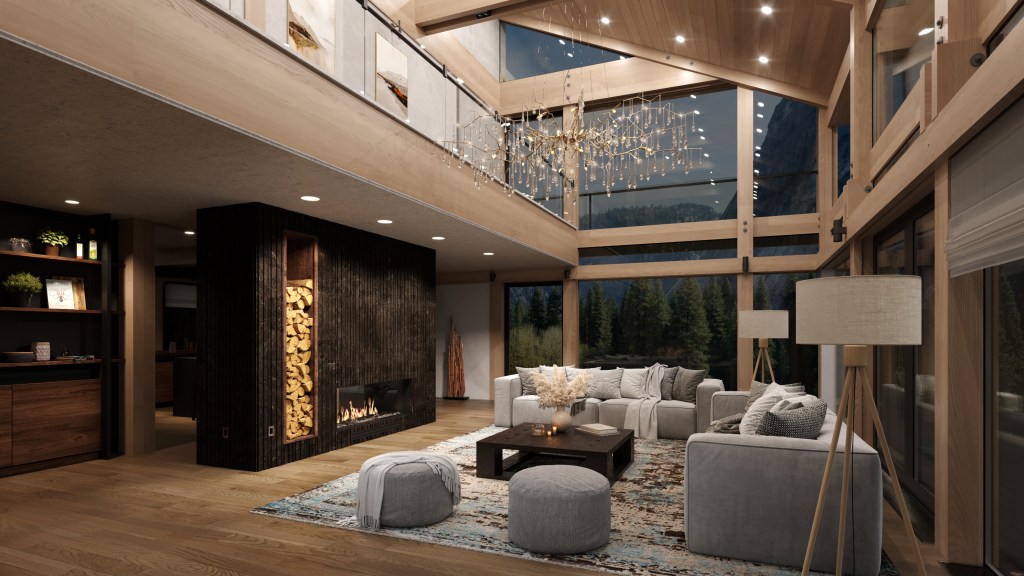
The bigger the house, the worse the lighting, or so it seems sometimes. Our most common reaction to larger rooms or taller ceilings generally ends up introducing even more glare-producing wafer lights or overhead decorative fixtures. The space may feature incredible interior design and architectural features, but the Comfort Zone is filled with darkness and shadows or the equally uncomfortable bright lighting. In a tall space like this one, so much of the light is concentrated overhead that the seating area almost always feels dark, secondary, less important. It’s like the couch should be lifted up near the ceiling if you want good light.
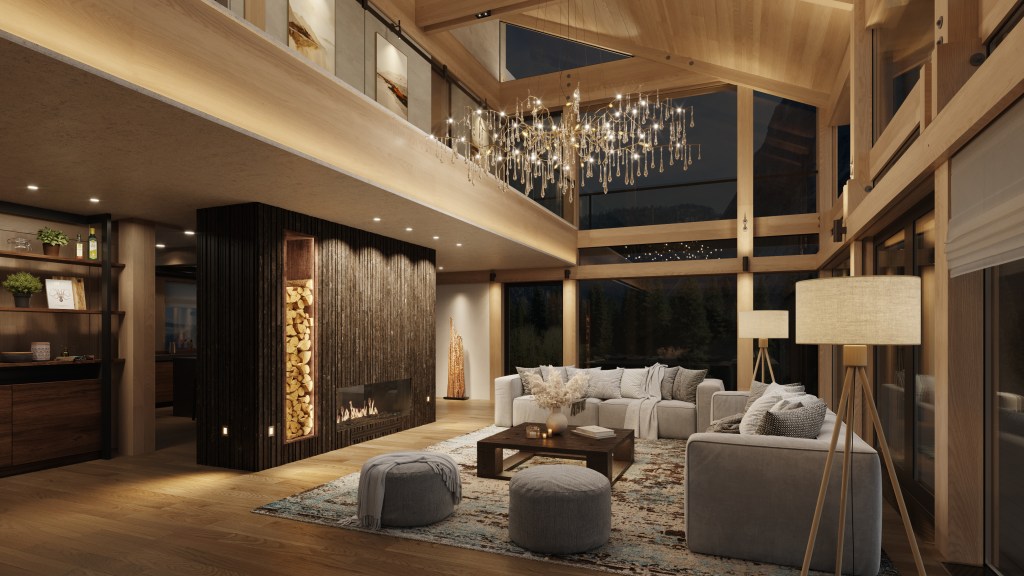
Ah, doesn’t that feel better? Again, we changed none of the architectural features, furnishings, or finishes. It is the exact same room, just under different lighting conditions. When I flip between the two, I see the focus of light move from high over our heads to down into the seating area. I notice soft light in the Comfort Zone from lamps, wall sconces near the windows, accent lighting inside the wood storage, and light on the sculpture near the back. There is even a concealed linear light fixture running the entire length of the beam holding up the second-floor balcony.
I made up the term “Comfort Zone,” but I didn’t make up the way our eyes perceive light. No matter what terminology you use, filling a space with soft, gently diffused, or reflected light makes us feel more comfortable than bright overhead lights. If you want to sell diesel fuel or paper towels, bright overhead lighting might be the right move. If you want to relax, try something else.
You can see- and feel- the difference.
 the language of light
Leave a comment