Are interior designers and lighting designers competitive or complimentary?
I am on my way home from my first trip to High Point Market and the relationship between interior designer and lighting designer is at the forefront of my mind, a direct result of the interactions I had at Market. Interior designers were everywhere – in the audience for my presentation on light in the digital era, next to me as fellow panelists for the WAC Group discussion, and across from me in multiple conversations.
Kate Kelly Smith, EVP Sandow Design Group (Luxe Magazine, among others) and panel discussion moderator, asked me if lighting designers and interior designers are competitive or collaborative. I was grateful for the opportunity to address the question head-on; so often assumptions are made and just as often those assumptions are off the mark.
I reassured the audience that lighting designers and interior designers make fantastic collaborators. If that is true, why are we often met with suspicion or even hostility? The reason comes down to a simple misunderstanding:
Interior designers are in charge of lighting.
Lighting designers are in charge of lighting.
Say what? What’s the difference, besides the italic font?
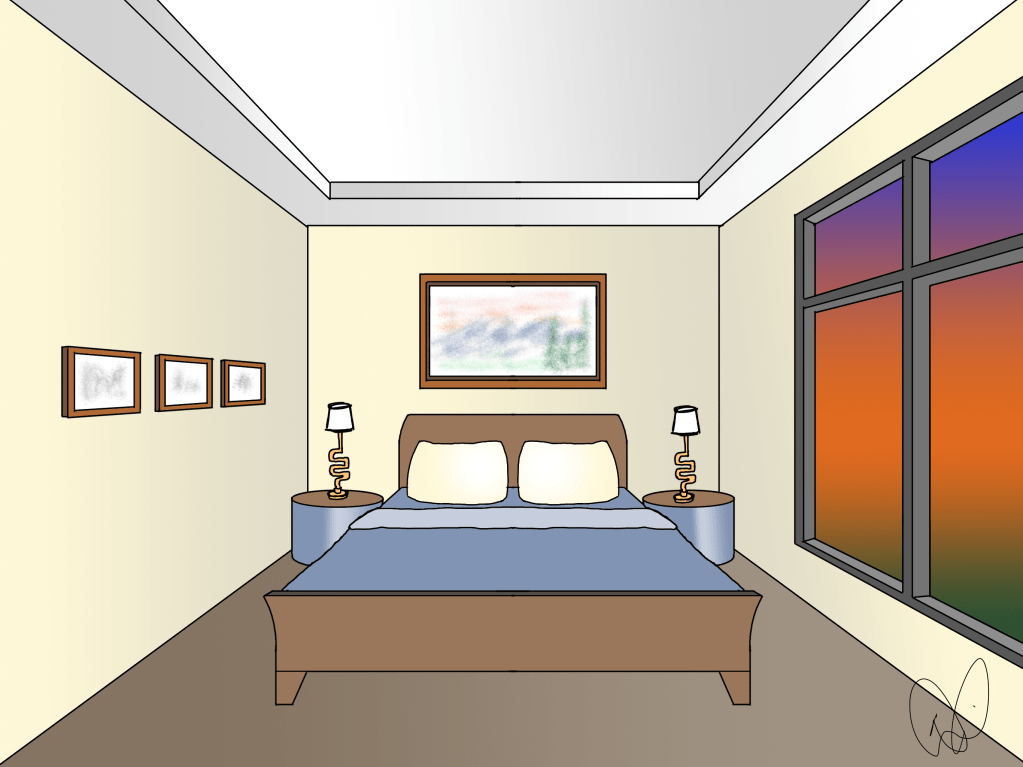
Set light aside for the moment and take on the role of interior designer. A client approaches you with a request: their primary bedroom is bland and ugly and does not fit their style. You check it out and, sure enough, there is nothing distinctive about the room. You could be in any number of budget hotels or guest bedrooms.
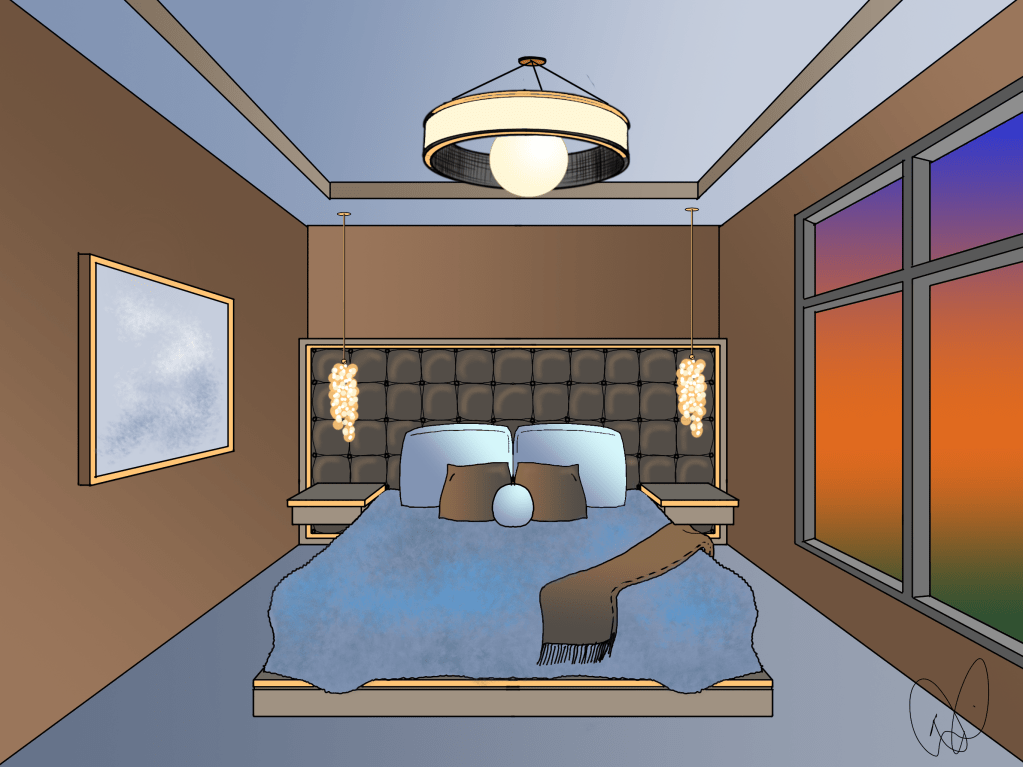
After the usual intake meeting with the client, you go to work and craft a refresh of the entire bedroom. The centerpiece is a new bed, but it is more than a bed. A tufted leather headboard spans the entire wall; the platform and side tables are edged in aged brass. New fabrics wrap the bed in comfort and beauty, and you finish the design with new wall and ceiling treatments and suitable art on the walls.
You work hard on your design, sourcing the materials, and work very closely with the bed manufacturer to make sure every detail is perfect.
Then, when you are close to finishing up, your client comes to you with a shocking statement.
“We’ve hired a bed designer.”
Say what? After all your work? But the bed is the centerpiece of your design?
You could be forgiven for reacting defensively. But let’s imagine that, after a cool-down period, you call up this so-called bed designer and introduce yourself and ask them to share their plans.
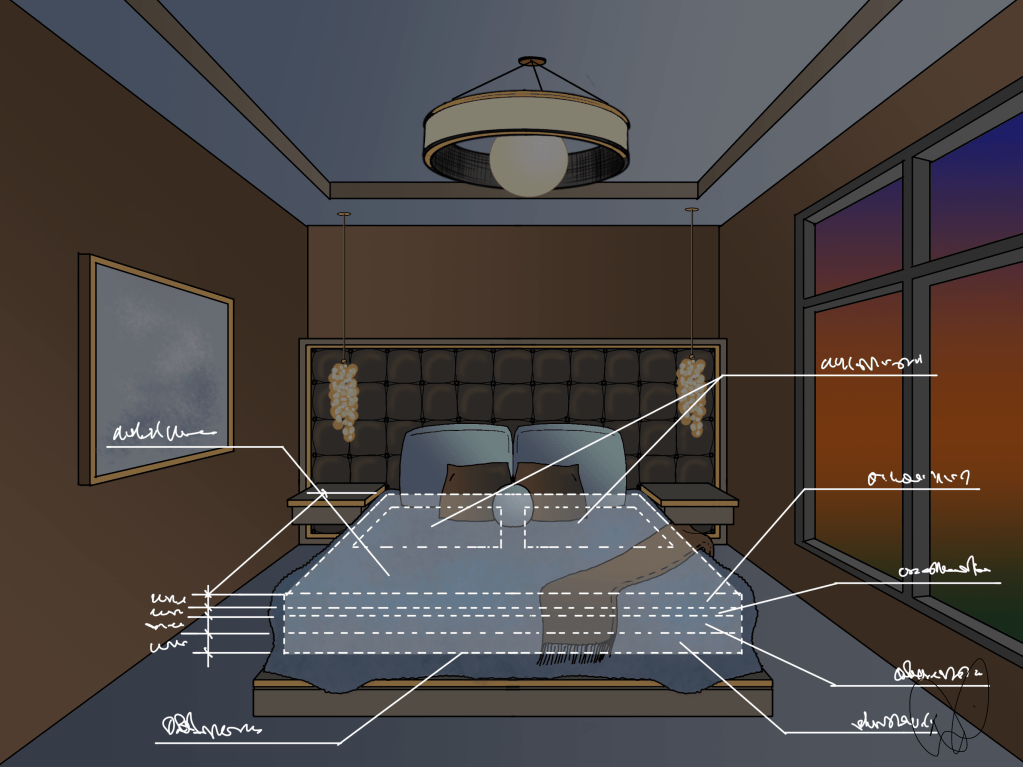
What follows is a surprising discussion that begins with the bed designer explaining the full body scan and orthopedic study of the client, a two-day sleep study, and detailed analysis of the client’s sleep needs. Hmm…this is not something you have done before…and you wonder where it is going?
The bed designer continues to explain how they carefully plan the mattress layers and zones based on their studies. They seem to geek out detailing each layer of foam and batting and coil. They seem to know their stuff.
All this is vaguely interesting, but you still haven’t found out how this will affect your work. So you ask them what they are recommending for the rest of the bed – the headboard, the fabrics, the platform, the side tables.
A look of confusion crosses their faces.
“Oh…we only do the mattress.”
That’s when you realize that “Bed Designer” is complimentary to your work. You still decide the vision, the look, the aesthetic of the space. You still specify and source the bed. When the client walks in, they will be wowed by your work.
And no one will even see the mattress, the territory of the bed designer. But, every single night, your clients will sleep more comfortably as a result of their work.
Now you wonder if you might recommend this bed designer to all your clients?
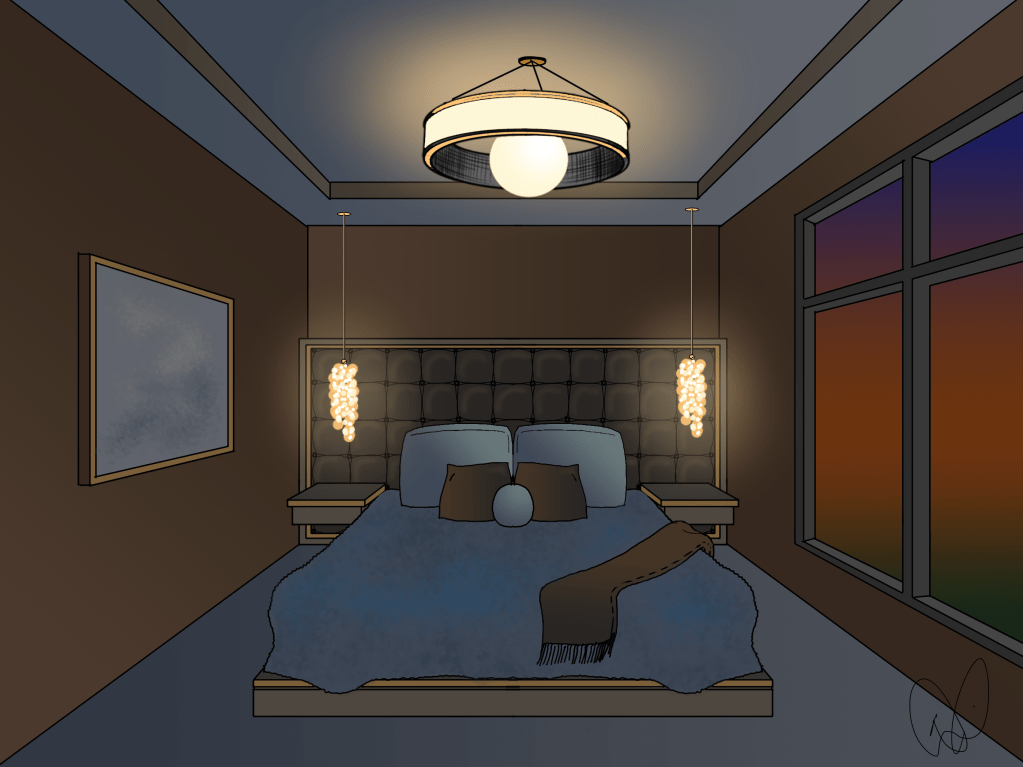
I created the fictional interaction between the interior designer and the bed designer for a reason, of course. The conversation is nearly identical to the one we as architectural lighting designers have when introduced to interior designers.
Interior designers, on the vast majority of residential projects, are often the most lighting-conscious professional. They likely even had a class in college at least partially about lighting, and as curators of the homeowners’ experiences, interior designers will do their best to provide quality illumination throughout a home.
Decorative lighting fixtures – those that should look beautiful even when turned off – can play an important role in pulling together a room. Chandeliers, wall sconces, and table lamps are part of the interior designer’s toolbox and, in most cases, these should remain in their domain.
Architectural lighting, on the other hand, is something quite different, like a high-performance mattress concealed within an interior designer’s bed of choice.
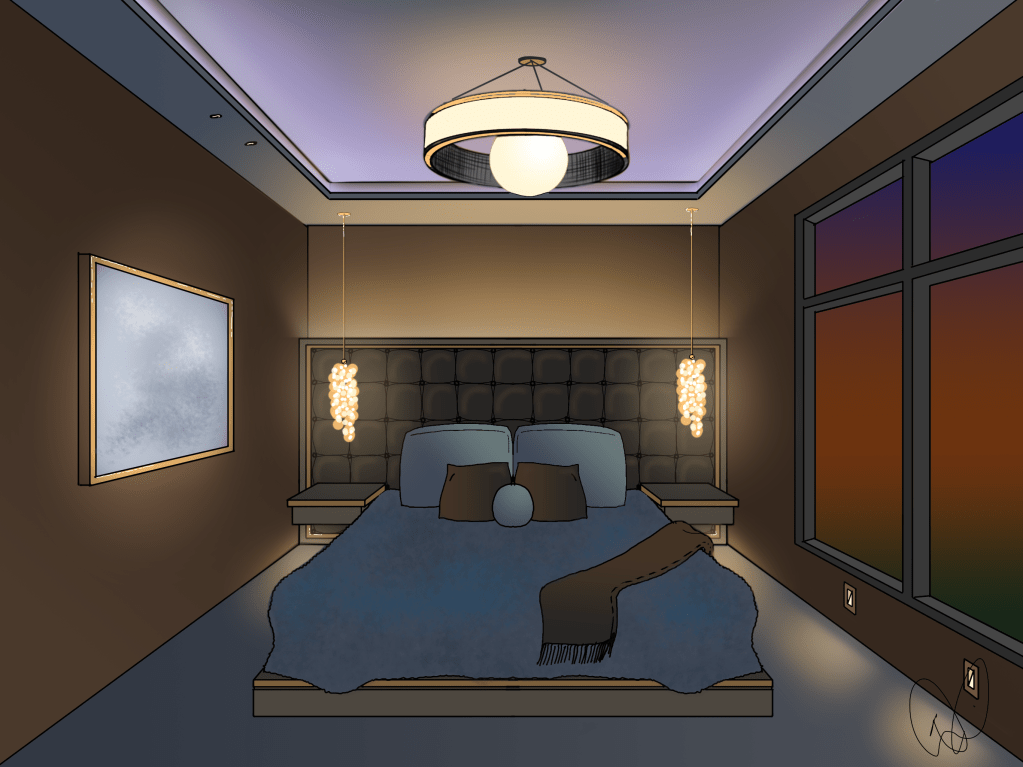
The best architectural lighting designs, in my opinion, will be all but invisible. We use high-performance tools that are, in essence, quite ugly and we go to great lengths to hide them or minimize their appearance. What is so great about a 1” recessed downlight? Not much, other than a 1” hole in the ceiling is quite a bit smaller than a 2” hole, and that can make them less noticeable.
Linear LED lighting, often called tape light, is improving rapidly but still looks like a piece of tape with stuff on it. In other words, ugly. So we spend incredible amounts of time developing details to conceal it from view. And smaller, hidden fixtures is only beginning of what an architectural lighting designer delivers.
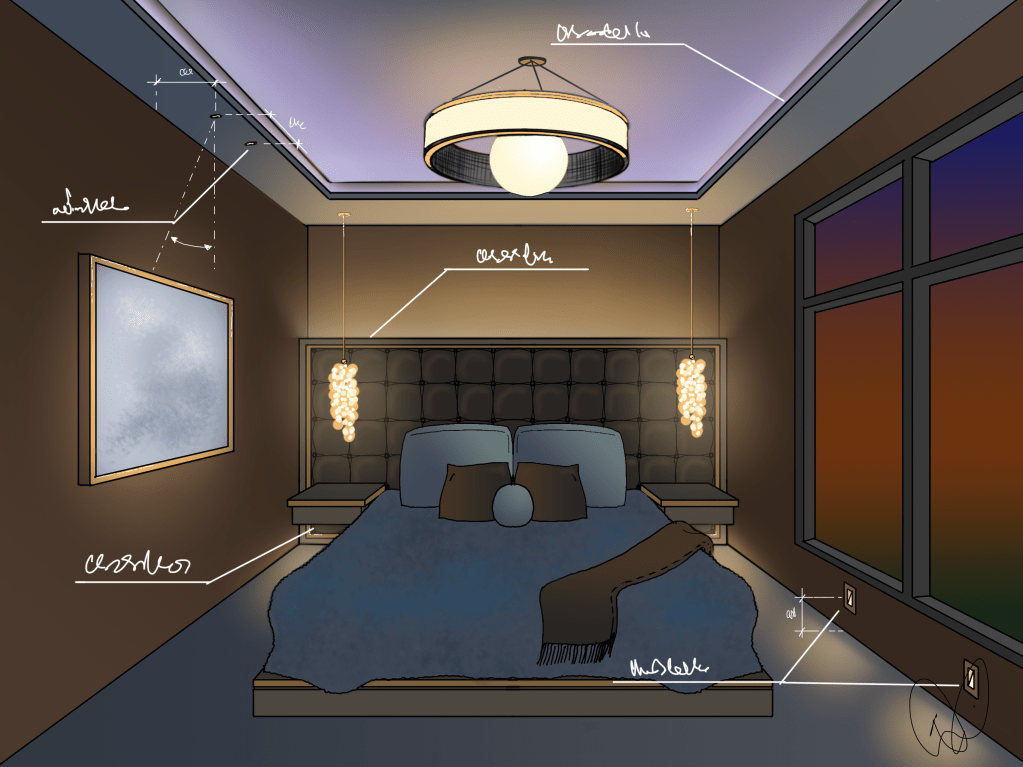
We spend our entire careers focused on lighting, and that affords us the ability to go deeper and wider in our learning. Our team spends time nearly every week in some kind of training session, from keeping up on the latest product to tuning in to light and health sessions to refining design techniques.
Like a comfortable custom-built mattress, architectural lighting can provide hidden comfort every single day. And yes, good lighting (and darkness) can even help your clients sleep better.
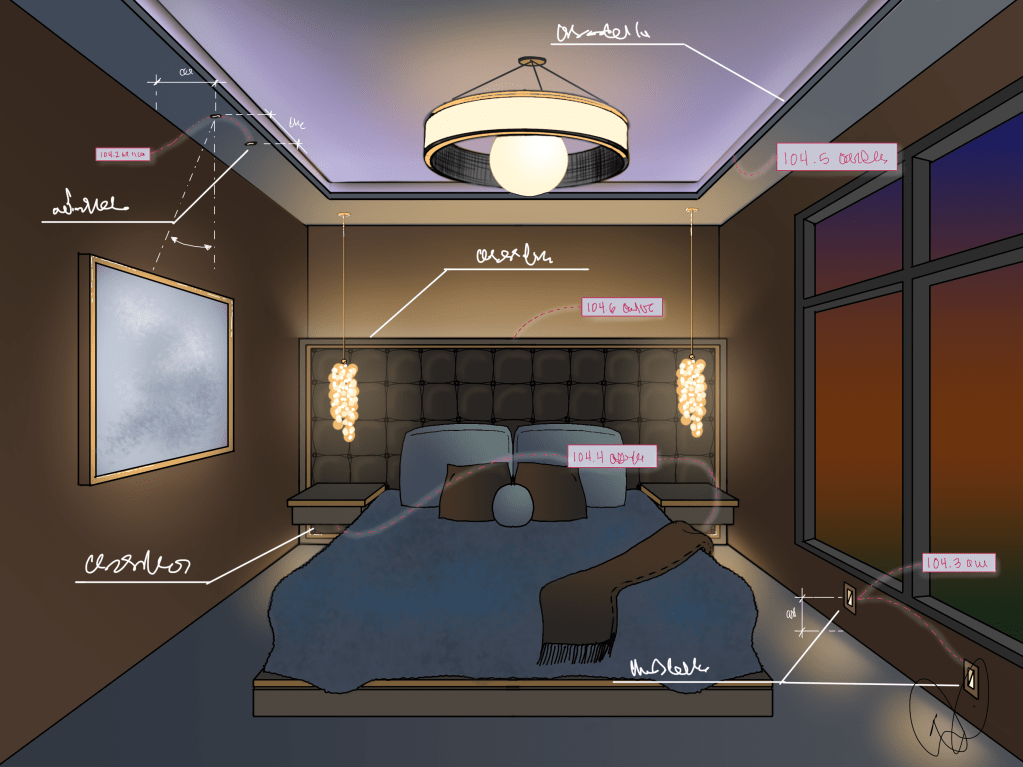
We can even get into control, how lights are grouped or zoned, and what the interface will look like and how it will function.
All told, lighting designers are a little about our fictional (?) custom mattress designer. We’re geeks. We dig the technical stuff. Sure, we can be very creative in our solutions, but we also take great pride in knowing the gear, the science, the biology, the physics, and photometry.
Don’t ask me to pick out your chandelier. Sure, I have opinions and even some knowledge, but the interior designer has more experience, more expertise, and more at stake in the selection of the lighting fixtures that will tie the room together and fill the room with lovely sparkle.
Don’t ask your interior designer to pick out your tape light. Sure, they have opinions and even some knowledge, but the architectural lighting designer has more experience, more expertise, and more at stake in selection of the lighting fixtures that will invisibly support comfort and convenience.
When we fight, the client is trapped in the middle of an ugly battle.
When we cooperate, the client lives a better life every time they are at home.
And that is a result that will make us all happy.


Leave a comment